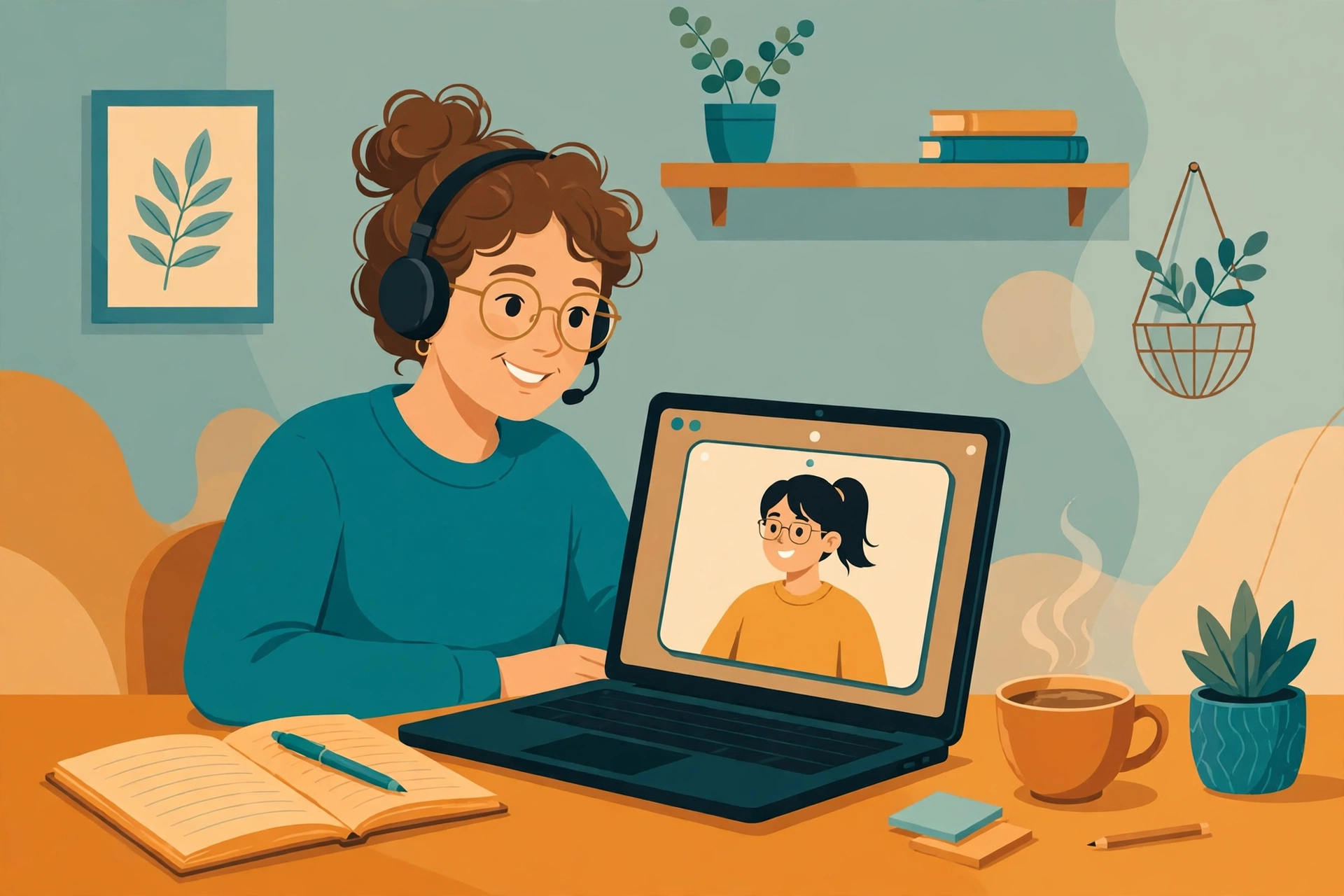
You can start online tutoring with no experience by picking one subject you already know well, learning basic online teaching skills, setting up simple tools — a computer, webcam, video calls, and a whiteboard — and finding first students through platforms, your network, and trial sessions. You do not need a teaching degree: being one or two levels ahead of your student, with honest preparation, is enough to begin.
Online tutoring is one of the most accessible ways to earn from what you know. You do not need a teaching degree, a classroom, or a big audience to begin — you need a subject you can explain clearly, a reliable internet connection, and a way for students to find you. This guide walks through starting from zero, in the order that actually works.
Start With What You Can Already Teach
Every tutor starts with knowledge someone else wants. Think about what you already know well: a school subject you excelled in, a language you speak, a test you passed, a skill from your job, or a hobby you can teach step by step. The best first subject sits at the overlap of three things: you know it deeply enough to answer unexpected questions, people actively search for help with it, and you enjoy explaining it.
You do not need to be a world expert. For most school subjects, being one or two levels ahead of your student is enough, as long as you prepare thoroughly and are honest about the limits of your knowledge. A tutor who says “let me check that and come back to you” earns more trust than one who guesses.
Learn the Basics of Teaching Online
Tutoring is not the same as knowing a subject — it is explaining it in a way that sticks. Before your first session, practice the core skills: breaking a topic into small steps, asking questions instead of lecturing, checking understanding frequently, and giving feedback that is specific rather than vague. Instead of saying “good job,” say “you set up that equation correctly — now watch the sign when you move the term across.”
Watch a few recorded tutoring sessions or teaching videos in your subject and notice what good tutors do: they wait after asking a question, they use examples from the student’s life, and they summarize at the end. You can practice on a friend or family member first — a single trial session will teach you more than hours of reading about tutoring.
Set Up Your Tools Before You Need Them
You need less equipment than most beginners assume. The essentials are a computer with a webcam, a decent headset or microphone, stable internet, and a video calling app. A digital whiteboard — many video tools include one, and free standalone options exist — lets you work through problems visually, which matters enormously for math, science, and language practice.
Add a simple way to share documents and a calendar for bookings. You do not need paid software at the start: free video calls, a free whiteboard, and shared documents cover nearly everything. Test your full setup with a friend before your first paying session, including screen sharing, audio, and the whiteboard, so technical problems do not eat into lesson time.
Decide What You Will Charge — and How You Will Get Paid
Pricing confuses every new tutor. Start by researching what tutors in your subject and area charge on tutoring platforms and job boards, then position yourself modestly at first — you are building reviews and experience, not competing on price forever. Many new tutors start with a lower introductory rate for their first few students and raise it once they have testimonials and a waiting list.
Set up payment before your first lesson: a payment app, bank transfer, or a platform that handles payments for you. State your rate, session length, cancellation policy, and payment timing clearly in writing before the first session. Clear terms prevent nearly all payment awkwardness later.
Where to Find Your First Students
There are three reliable routes, and you should try all three. First, tutoring platforms and marketplaces, where parents and students search for tutors — competitive, but a good place to learn what clients ask for. Second, your own network: tell friends, family, former teachers, and local parent groups that you tutor, and ask them to spread the word. Many first students come from a personal recommendation. Third, a simple online presence: a short profile page describing what you teach, who it is for, and how to book a trial session.
Offer a short trial session or a free introductory call. It lowers the barrier for a nervous parent or student, and it lets you both check that you are a good fit before committing. Expect some no-shows and rejections at first — that is normal, and each conversation sharpens your pitch.
Plan Your First Month
Week one: choose your subject, list the topics you can teach, and set up your tools. Week two: prepare a simple lesson structure and run two practice sessions with friends or family. Week three: create profiles on one or two platforms, tell your network, and offer trial sessions. Week four: follow up with everyone you spoke to, take your first paying students even at a modest rate, and ask each one for feedback and, if they are happy, a short testimonial.
That first paying student matters more than the fee. It proves the model works, gives you a real teaching experience to learn from, and often leads to referrals if you teach well and communicate clearly with parents.
Mistakes New Tutors Should Avoid
Do not teach without preparing — even experienced tutors plan each session. Do not lecture for the whole hour; students learn by doing, so build in practice time. Do not skip the business basics: no written terms, no payment method, and no record of bookings will cause problems sooner than you expect. And do not stop looking for students the moment you land one, because tutoring schedules change and students finish, move on, or pause without warning.
The Bottom Line
Starting online tutoring with no experience is a sequence, not a leap: pick a subject you know, learn to explain it well, set up simple tools, price fairly, and find students through platforms, your network, and trial sessions. Nobody hands you permission to call yourself a tutor — you earn it by teaching well, showing up on time, and helping students make visible progress. Start this week, and a few months from now the “no experience” problem will be a story you tell new tutors.
Frequently Asked Questions
Do I need a teaching degree to tutor online?
No. You need a subject you can explain clearly, honest preparation, and the willingness to say “let me check that” when you do not know something — that earns more trust than guessing.
What equipment do I need to start?
A computer with a webcam, a decent headset or microphone, stable internet, a video calling app, and a digital whiteboard. Free tools cover nearly everything at the start.
How do I get my first student?
Try three routes at once: tutoring platforms, your own network of friends, family, and parent groups, and a short trial session or free introductory call that lowers the barrier for nervous parents and students.